Tuckman’s Team Formation Model
This motion graphic animation explains Bruce Tuckman’s 4-stage team development process through powerful visual storytelling. It addresses inevitable conflicts and how to accelerate productive team building in organizational settings.
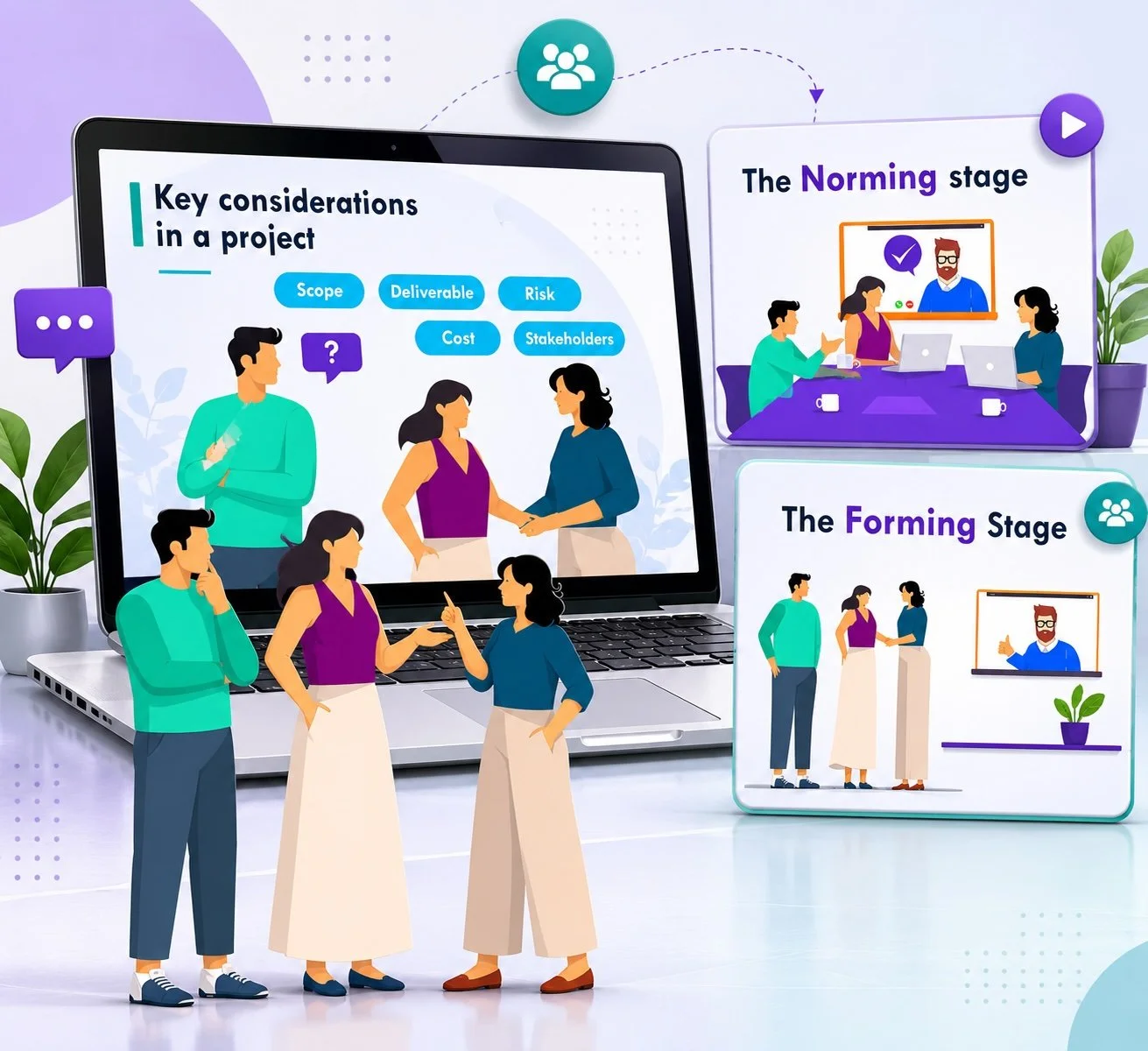
The problem & the solution
Tuckman's model is one of the most cited frameworks in organizational team development — yet almost always presented as a static diagram. I turned this four-stage academic model into a corporate-style motion graphic design that can facilitate its understanding for all managers, leaders, and members. The design process included the following steps:
Visual storyboarding and slide framing
Meticulous scriptwriting
Adobe Illustrator for vector creation
Adobe After Effects for animation workflow
AI-assisted tools for voiceover generation
Script Writing & Storyboarding
After researching the importance of Bruce Tuckman’s model in collaboration, conflict, and team development, I created the initial script that explained the five stages with a tone and style aligned with corporate format. I used GPT and Gemini to continuously refine the script so it lends itself well to visualization, iconography, and transitions. I then translated the script into a detailed storyboard document that included concrete visual elements, personas, figures, and sequenced slides and transitions.
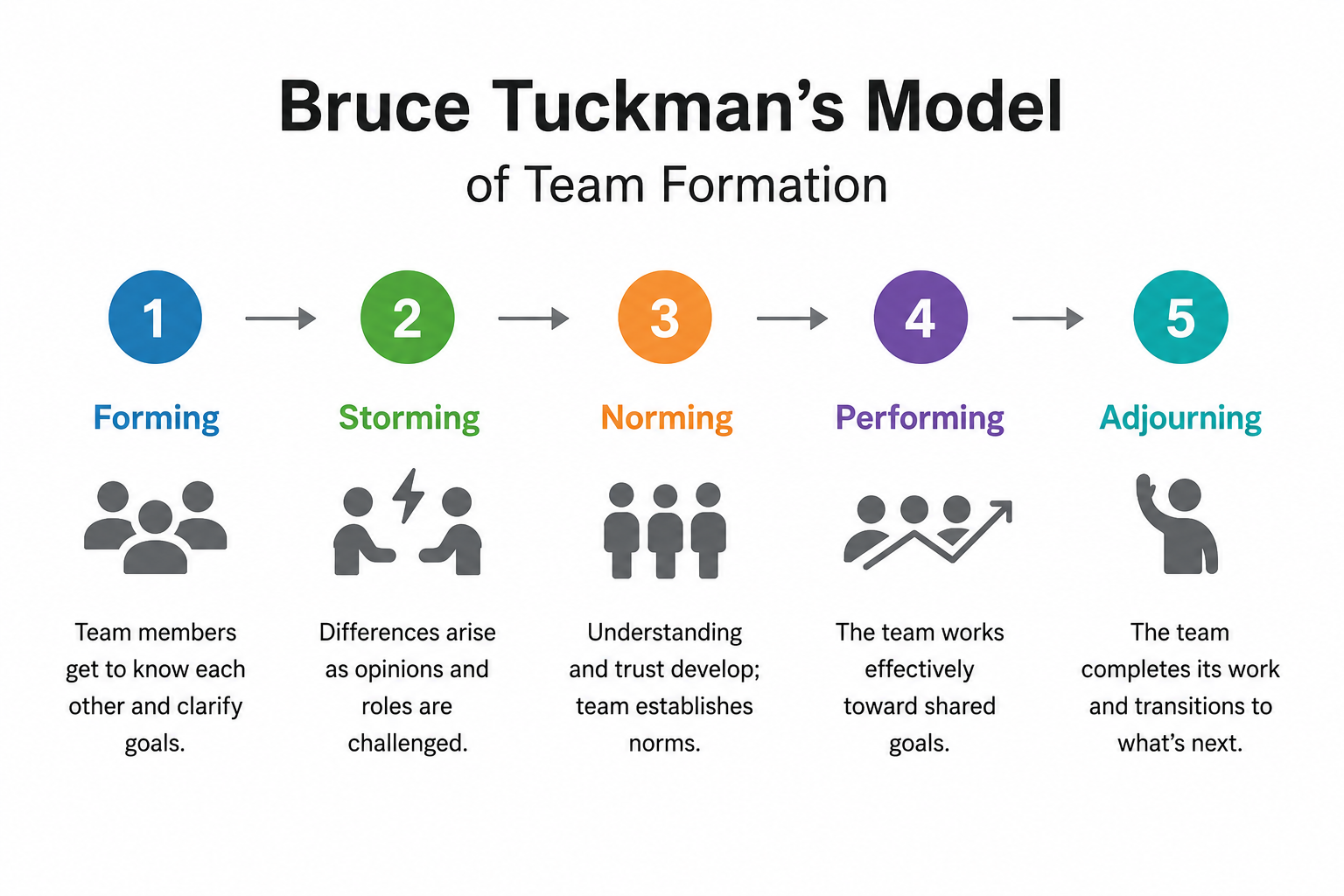
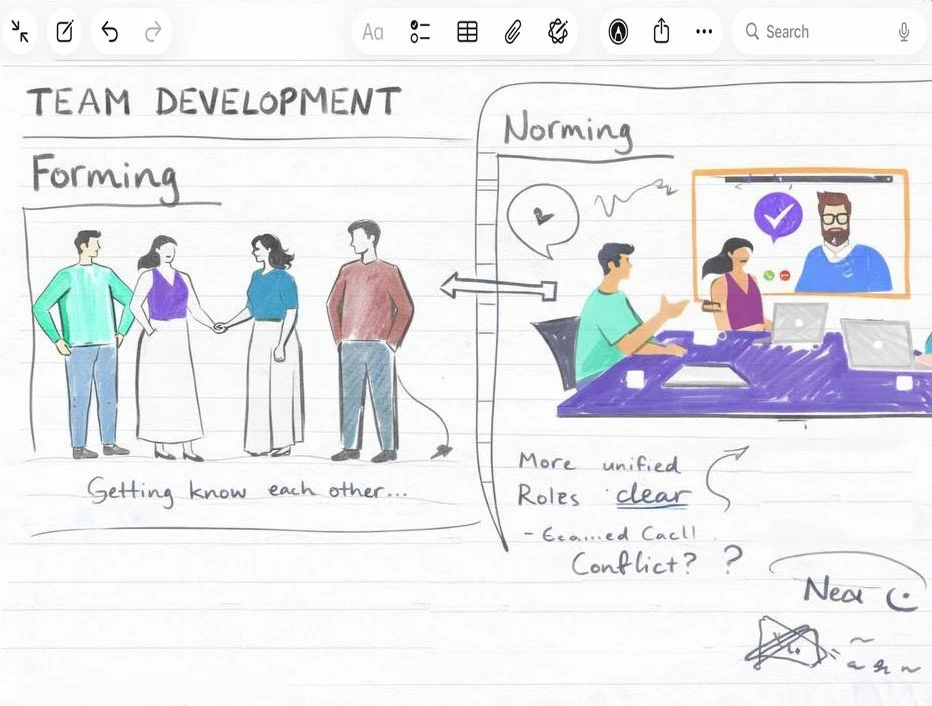
Visual asset production
Once I had the fully developed script and the storyboard, it was time to develop the 2D vector-style personas in Adobe Illustrator and After Effects. My main concern was to strengthen recognition and continuity throughout the animation, so I assigned distinct colour palettes and visual identities to different characters and stages. This helped create memorable visual anchors while maintaining consistency across scenes.
To make the theory more relatable and applicable, I chose to situate the entire experience within a workplace environment. Rather than treating team development as an abstract concept, the visuals illustrated realistic team interactions, collaboration challenges, and evolving group dynamics commonly experienced in organizational settings. This grounding helped transform the model into something learners could immediately connect to and apply.
Full Development - Animating the Project
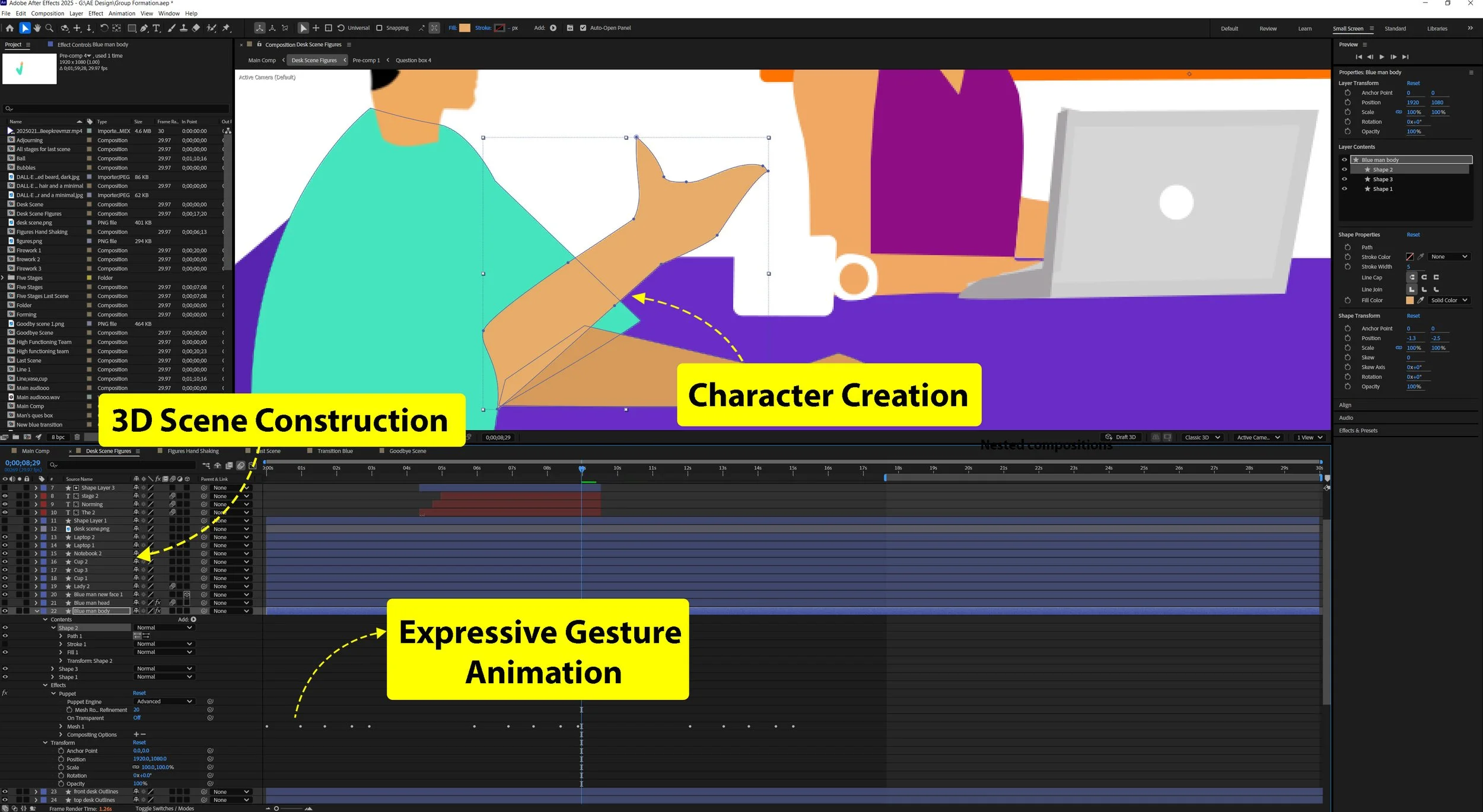
One phase I really enjoyed was animating the characters and elements in Adobe After Effects. This phase involved character creation (faces, hair styles, body parts), object drawing (tables, chairs, vases, etc.), gesture animation, character interactions, and creating smooth transitions between developmental stages. I organized the project using distinct composition layers and structured sequencing, which allowed me to manage post-production revisions efficiently.
Watch the animation