Cellular Organelles
This educational animation was designed and developed as a part of a broader e-learning module for a 10th-grade biology curriculum. It simplifies understanding cellular structures through visual storytelling to prevent cognitive overwhelm.
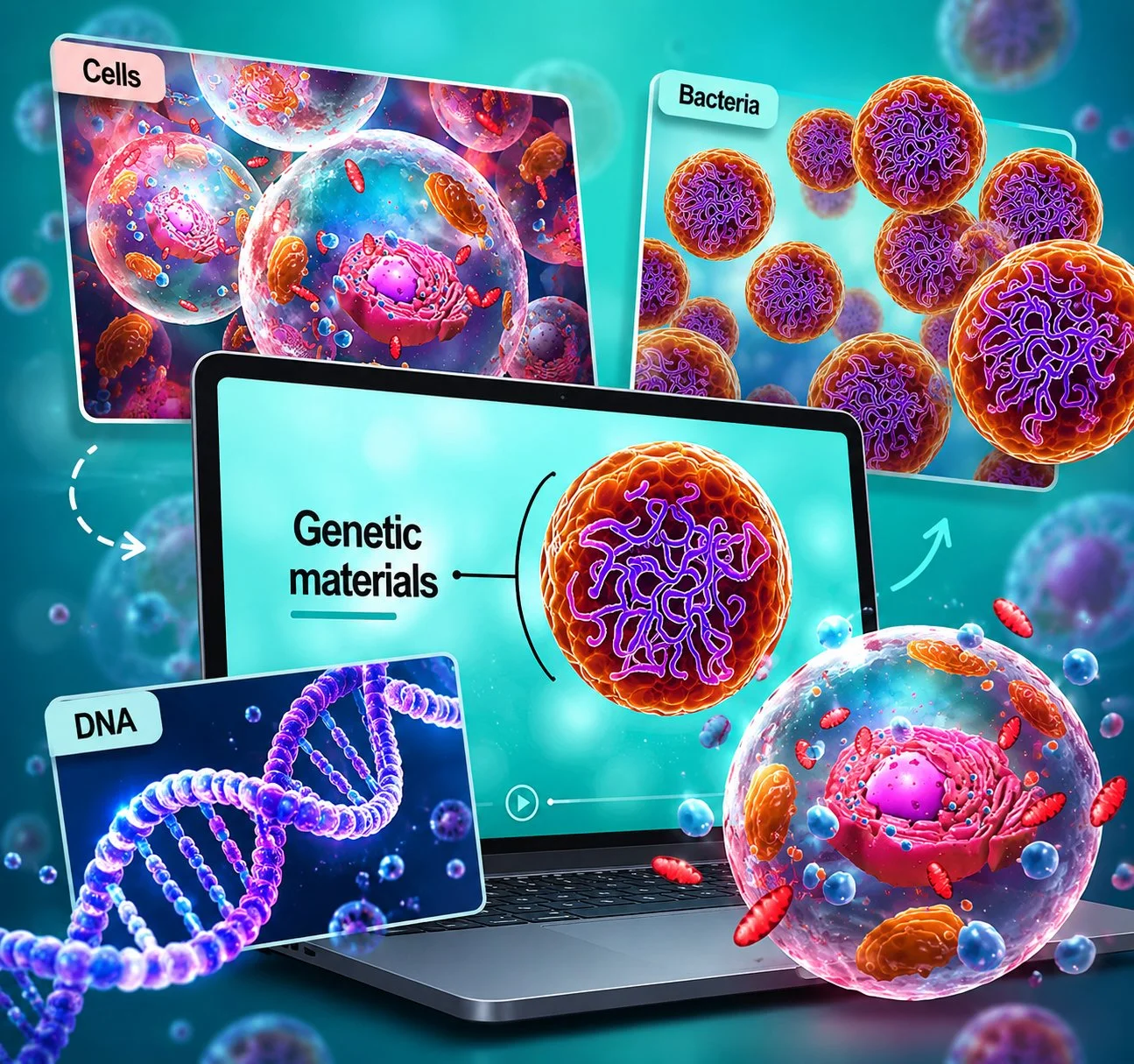
The Problem
This video represents the visualization of scientific biological structures with clear, digestible motion graphic techniques. For a 10th-grade biology student, it is difficult to understand abstract biological concepts through static textbook diagrams. This motion graphic animation transformed the abstract cellular structures into a living, three-dimensional narrative of the human cell.
Production of the Human Cell in After Effects
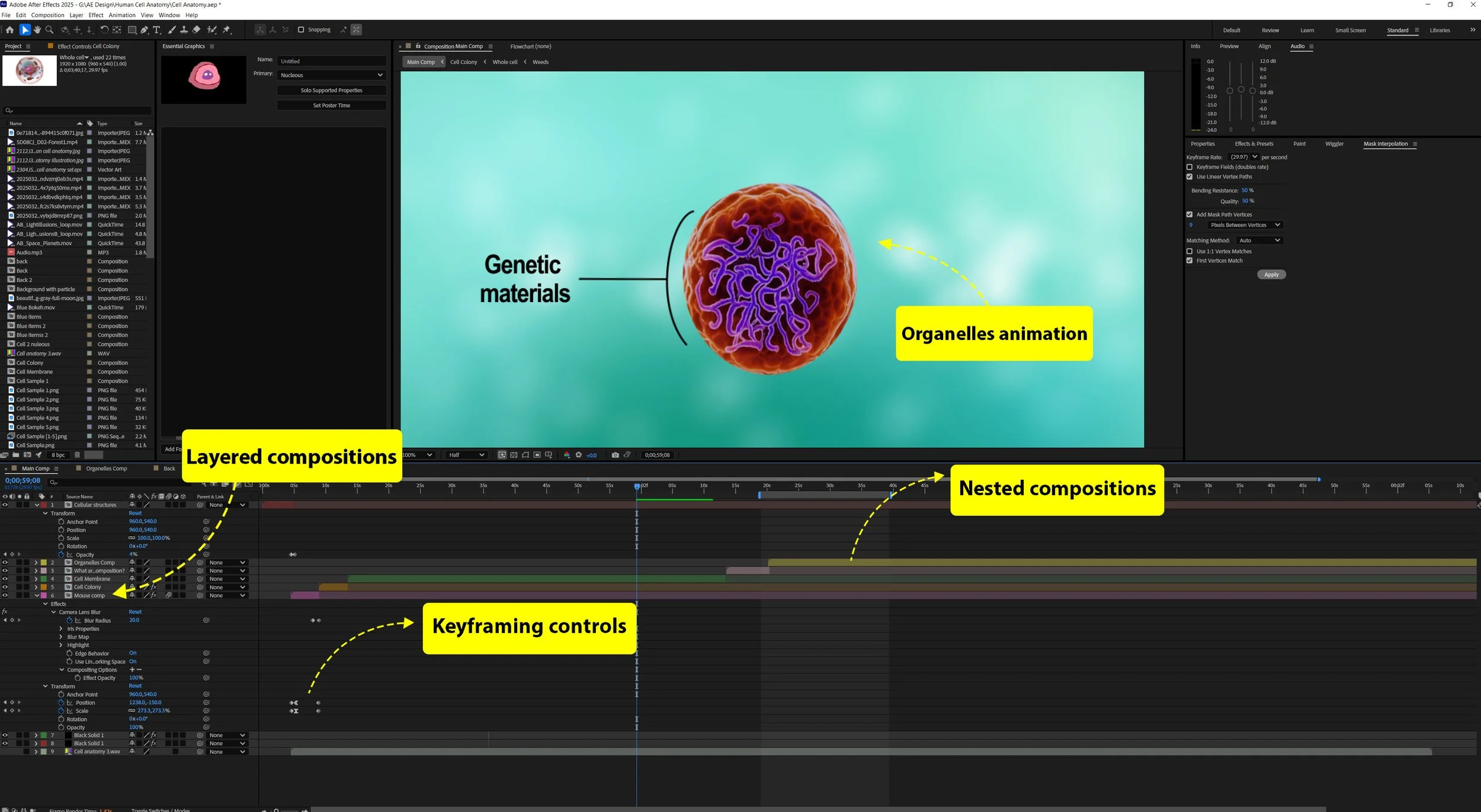
The production in Adobe After Effects utilized a "layered discovery" approach, where the complexity of the cell is revealed incrementally to prevent cognitive overwhelm.
To move beyond flat 2D diagrams, I used a combination of Z-space depth and subtle "floating" expressions to simulate a fluid, cytoplasmic environment. This gives the organelles a sense of suspension that mirrors the biological reality of the cell.
Vector-to-motion workflow
Starting with precise assets from Adobe Illustrator, I converted each organelle into shape layers to allow for non-destructive scaling and intricate internal animations (For example, the "shipping" movement of the Golgi apparatus).
From a learning standpoint, the video unfolds through scaffolded complexity: The video begins with the "whole" cell before diving into specific "parts." This "Global-to-Local" instructional strategy helps students build a mental map of the cell before they are asked to memorize specific organelle functions.
Watch the animation