The Decisions You Don't Know
You're Making
“The Decisions You Don’t Know You are Making” is a scenario-based eLearning module on unconscious bias in workplace that helps managers recognize how unconscious bias shapes workplace decisions. Through realistic scenarios and guided reflection, learners develop practical strategies to recognize, interrupt, and mitigate bias in common decision-making situations.
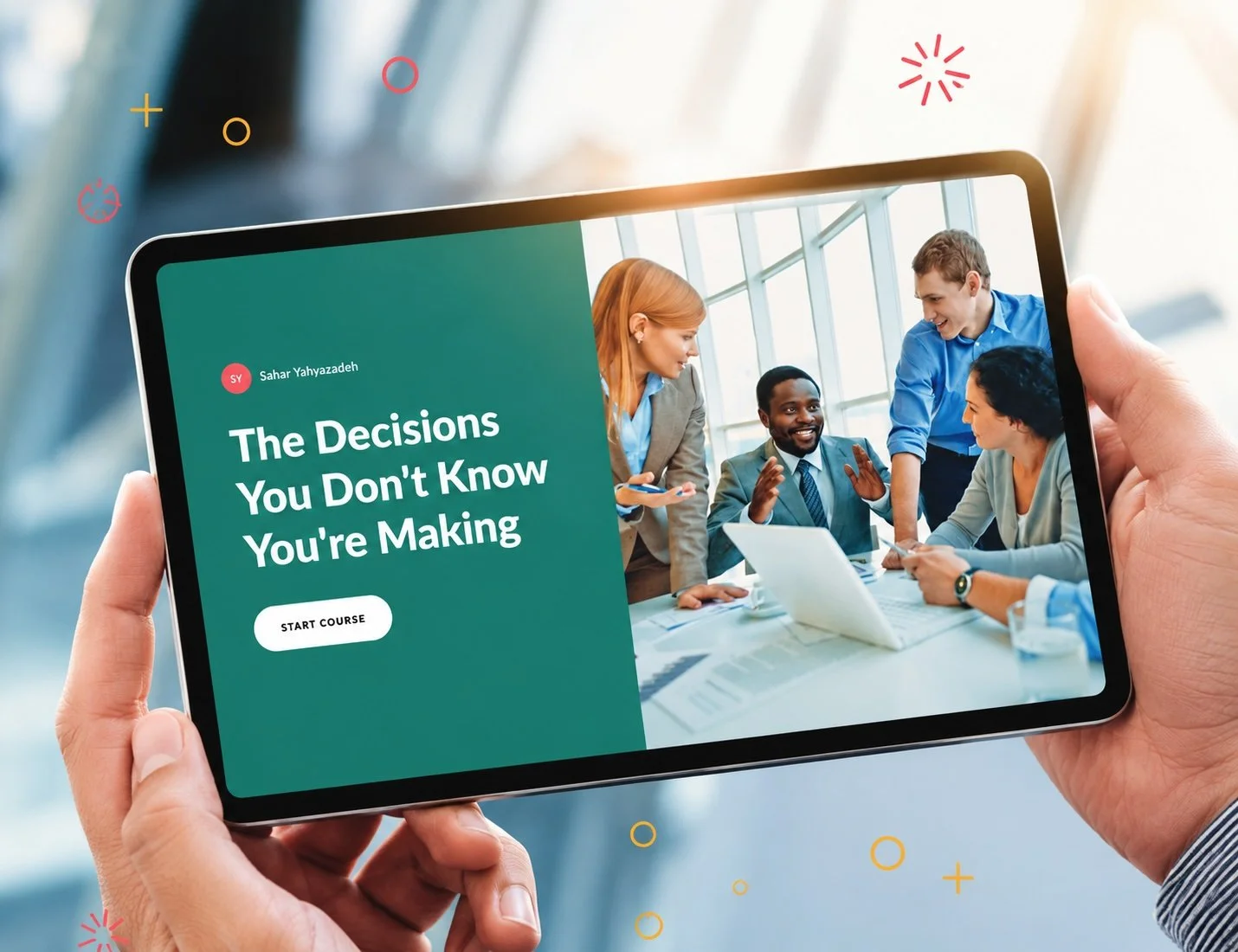
Audience: Managers & corporate professionals
Responsibilities: Instructional design (learning architecture, visual design, authoring)
Tools used: Articulate Rise, ChatGPT, Claude Code, Magnific, Microsoft Office, Synthesia, Adobe Premiere
The Design Challenge
Organizations frequently invest in unconscious bias awareness training, yet research suggests awareness alone rarely changes workplace behavior.
The challenge was therefore not simply to explain unconscious bias—but to design a learning experience that encourages managers to recognize bias while they are making decisions rather than after the fact.
This required shifting the experience from information delivery toward reflection, scenario-based practice, and decision awareness.
The Solution
I chose a linear, lesson-based, and structured architecture in Articulate Rise so learners experience a self-paced reflective learning that respects their time without the constraints of scheduled sessions. Rise's interaction blocks allow learners to move fluidly through short, focused learning moments while maintaining accessibility across desktop and mobile devices.
The beginning of the module opens intentionally by a disrupting familiar situation before defining unconscious bias. This creates curiosity and encourages learners to question their own assumptions: that they are already the exception. Instead of presenting definitions first, learners gradually discover how bias emerges through scenarios, reflection prompts, and decision-making exercises.
From there, the module moves through bias recognition and interruption strategies followed by three branching scenarios that boost learners’ awareness by replicating real-world use situations. Each scenario encourages learners to make decisions, reflect on their reasoning, and receive feedback framed around inclusive leadership principles, connecting self-awareness to practical workplace behaviors.
By the end of the module learners will be able to:
• Recognize how unconscious bias influences workplace decisions
• Identify situations where judgment becomes less reliable
• Apply practical techniques to interrupt biased thinking
• Reflect on personal decision-making patterns through a personalized bias audit
AI-Enabled Video Generation and Edit
To support dual-channel learning, I created short AI-presented videos using Synthesia, introducing key concepts before learners encounter interactive activities. The platform allowed me to choose an AI presenter to explain key concepts visually and in an engaging manner. After generating the videos, I refined them in Adobe Premiere Pro by adding callouts, on-screen text, visual emphasis, transitions, and insert footages. This helped enhance clarity and reinforce key messages to guide learners’ attention.
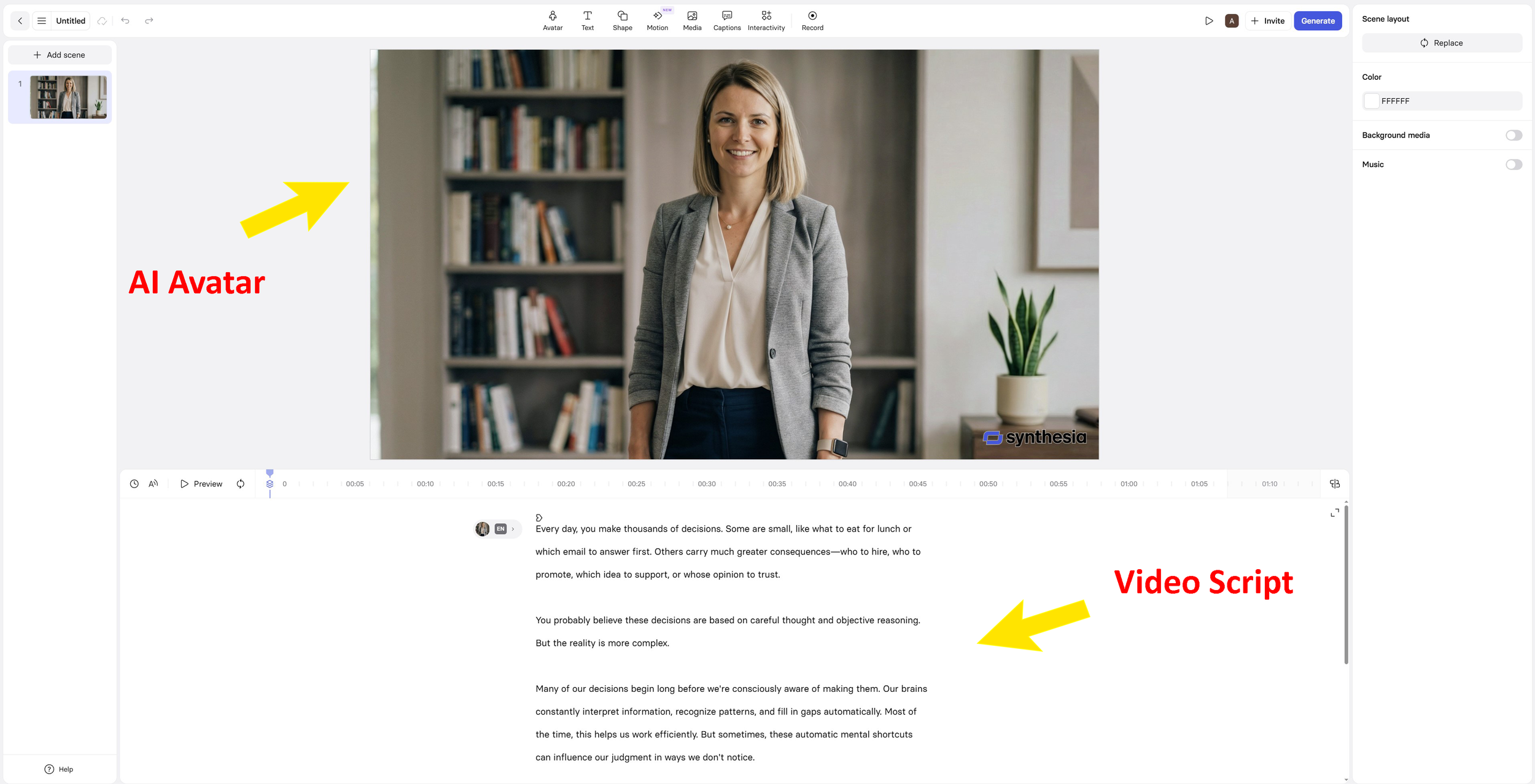
Creating AI-enabled videos in Synthesia
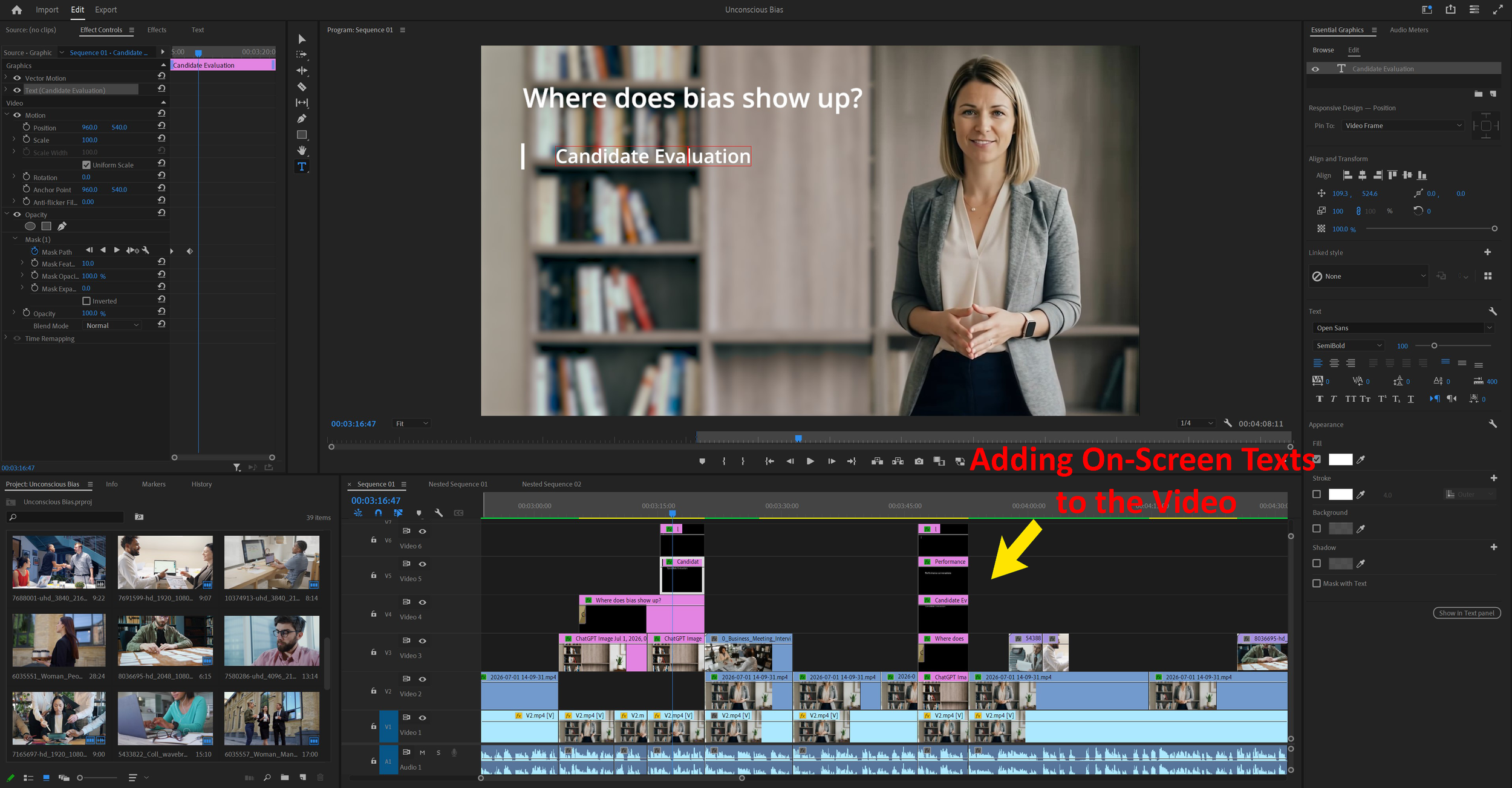
Adding on-screen elements in Premiere Pro
AI-Enabled Personal Bias Audit
One feature I particularly liked developing was a scored personal bias audit. My goal was to give every learner something precise to take away: not a reminder “to be more aware” but a picture of where their patterns show up and what to do about it. To achieve this, I used JavaScript and Claude AI as a collaborative development tool to design a scored Personal Bias Audit that creates a personalized output for learners about their bias awareness across over 80 profile combinations.
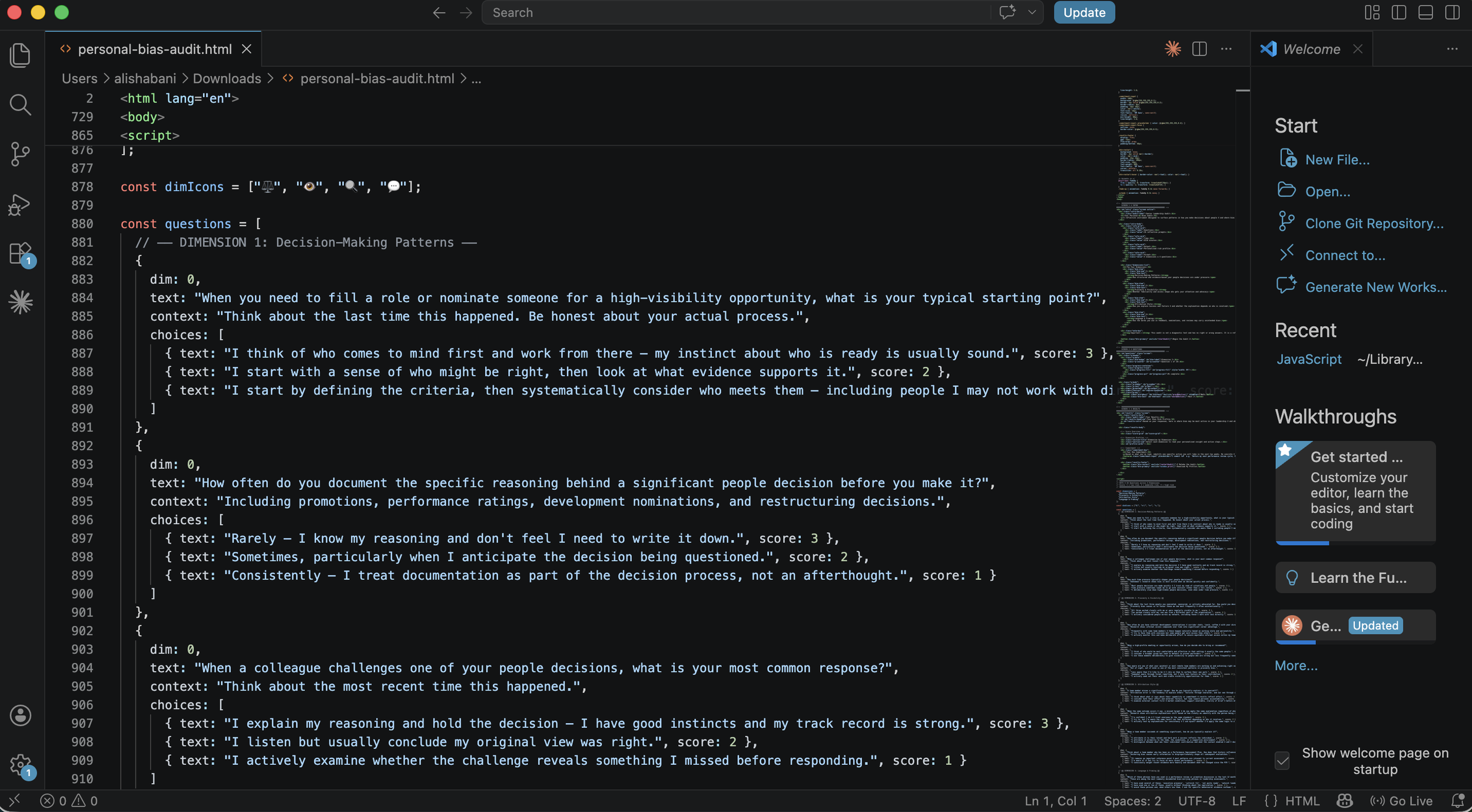
EXPERIENCE THE MODULE